Do real brain research.
The 2026 Woods Hole cohort is using Backyard Brains tools to record living neural signals, work with invertebrate and local marine organisms, analyze data, and build a group research project with neuroscientists near the MBL.
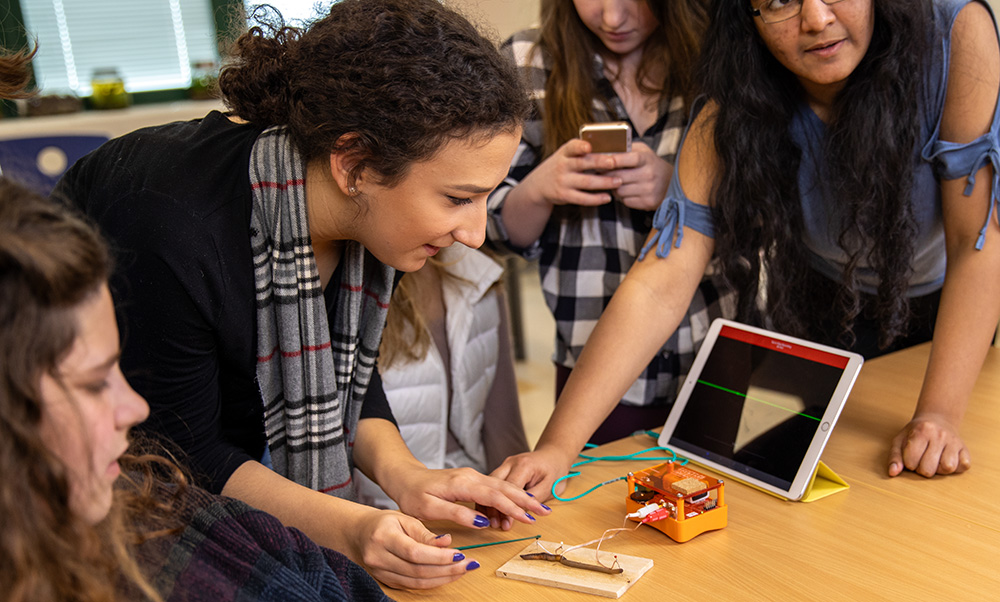
This is not a gadget camp.
Students will learn how neuroscience research actually works: choosing a question, recording from living tissue, running controls, keeping a lab notebook, analyzing signal data, and explaining what the results mean.
Invertebrates and Woods Hole life
Students will work with accessible model organisms, including invertebrates and local marine animals available through the Woods Hole/MBL environment.
Electrophysiology first
They will record spikes, muscle activity, stimulation responses, and behavior using Backyard Brains equipment and research-grade habits.
Scientists in the room
Three visiting neuroscientists help teach techniques, shape research questions, and mentor student projects alongside local teachers.
What students will learn to do
The goal is not to memorize brain facts. The goal is to practice the moves of a scientist.
Frame a research question
Turn curiosity about behavior, sensation, movement, or environment into a testable experiment.
Record neural signals
Use electrodes and SpikerBoxes to observe electrical activity from nerves and muscles.
Work with living systems
Study invertebrate models and local marine organisms with care, safety, and respect.
Analyze data
Look for patterns in recordings, compare conditions, graph results, and learn what counts as evidence.
Present like a scientist
Share a group project: question, method, data, conclusion, and the next experiment you would run.
Meet researchers
Hear short research talks from visiting scientists and Grass Fellows connected to the MBL community.
The three-week research arc
Students move from fundamentals to guided experiments to a final group research project.
Learn the tools
Neurons, spikes, stimulation, behavior, lab safety, and the basics of recording from invertebrate nervous systems.
Run guided experiments
Students practice experimental design, collect data, and begin shaping their own group research question.
Do the project
Teams complete a research project, analyze their evidence, and present what they found to instructors and peers.
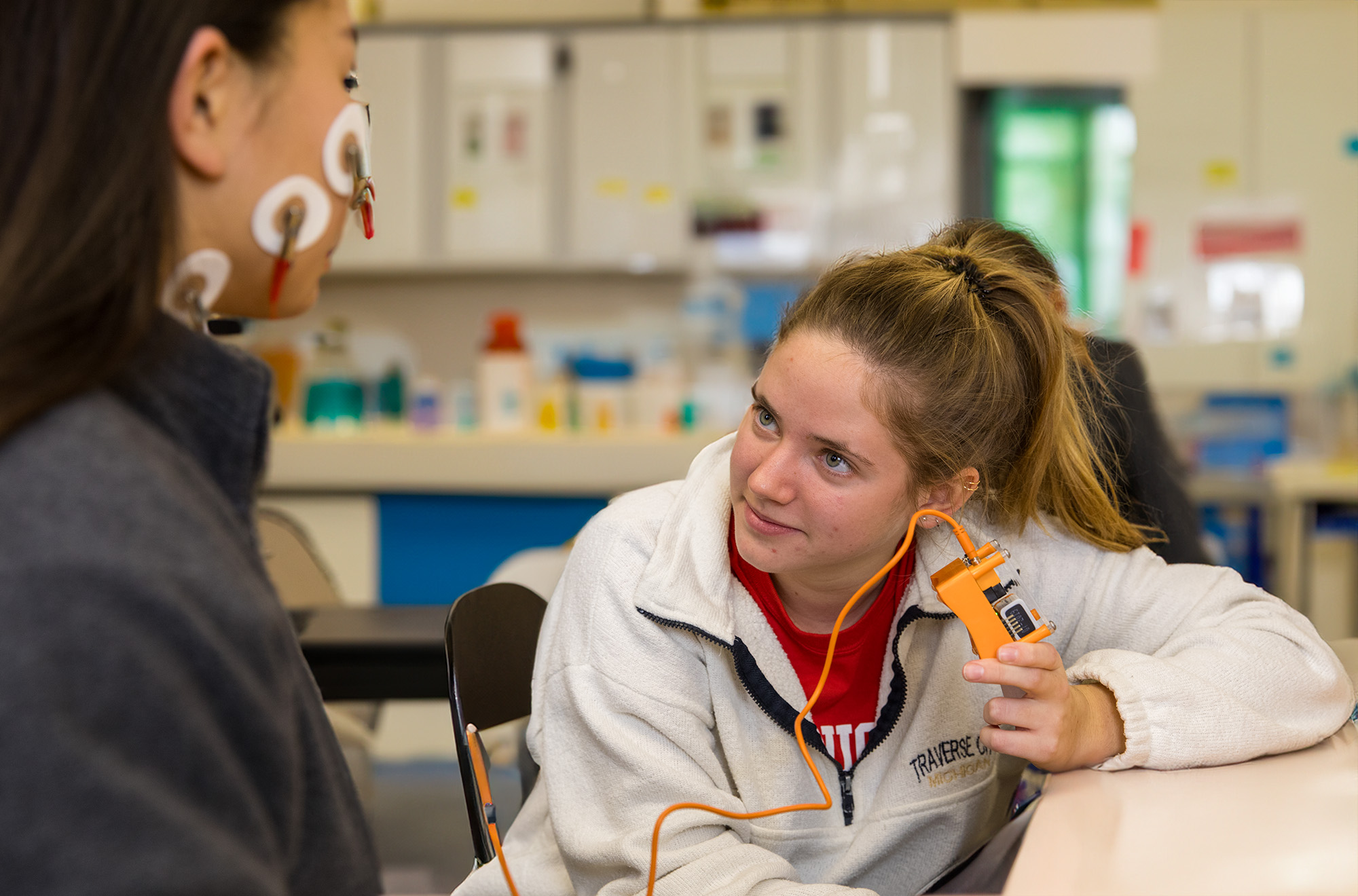
Woods Hole is one of the best places in the world to ask questions about animals, behavior, and nervous systems.
Why CSS and Grass Labs
This course is designed as a sustainable Cape Cod neuroscience program, not a one-off workshop.
Grass Foundation connection
The Grass Foundation supports neuroscience training and sees CSS in Woods Hole as an ideal host for a high-school level neuroscience research experience.
Teacher training built in
Local Cape Cod science teachers will train alongside the students and scientists so the course can continue in future summers.
Equipment stays local
Neuron SpikerBox kits and supplies are intended to remain at CSS and with participating teachers, building a long-term local neuroscience lab base.
Course details
For families, educators, and supporters following the 2026 cohort now underway.
When
- CSS Session B: July 20-August 6, 2026
- Monday-Friday
- 2:30-4:15 p.m.
Who
- Students ages 14-16, as listed by CSS
- Up to 15 students
- Curious students interested in animals, brains, behavior, medicine, marine biology, or research
Course status
The 2026 Session B cohort is underway in Woods Hole, preserving the full three-week arc from first recordings to final research presentations.
FAQ
Short answers about the research experience.
Do students need previous neuroscience experience?
No. The course is built for curious students who want to learn research methods. Students will learn the equipment, vocabulary, and lab practices during the course.
Will students just watch demonstrations?
No. The course is hands-on. Students will collect data, make observations, and work in small groups toward their own research project.
What kinds of organisms are involved?
The course centers on accessible invertebrate models and local Woods Hole marine life when available, with appropriate supervision and safety protocols.
What makes Woods Hole a special place for this course?
Students are surrounded by a working marine science community, with local organisms, visiting scientists, and the MBL ecosystem all reinforcing the feeling of real field-connected research.
Real neuroscience research, already in motion.
Small cohort. Scientist mentors. Woods Hole organisms. Real recordings. A final research project students can explain because they actually did the work.