From the Backyard Brains team behind 9 TED presentations and the MIT Press bestseller How Your Brain Works.
A 3‑week, hands‑on neuroscience training in Woods Hole — run by Backyard Brains and the Children's School of Science. Teachers learn electrophysiology by recording real neural signals, then bring those labs back to their classrooms.
You won't just learn neuroscience — you'll run experiments.
Teachers train with scientists and then help lead a concurrent high‑school neuroscience lab course at CSS (student tuition is handled through CSS).
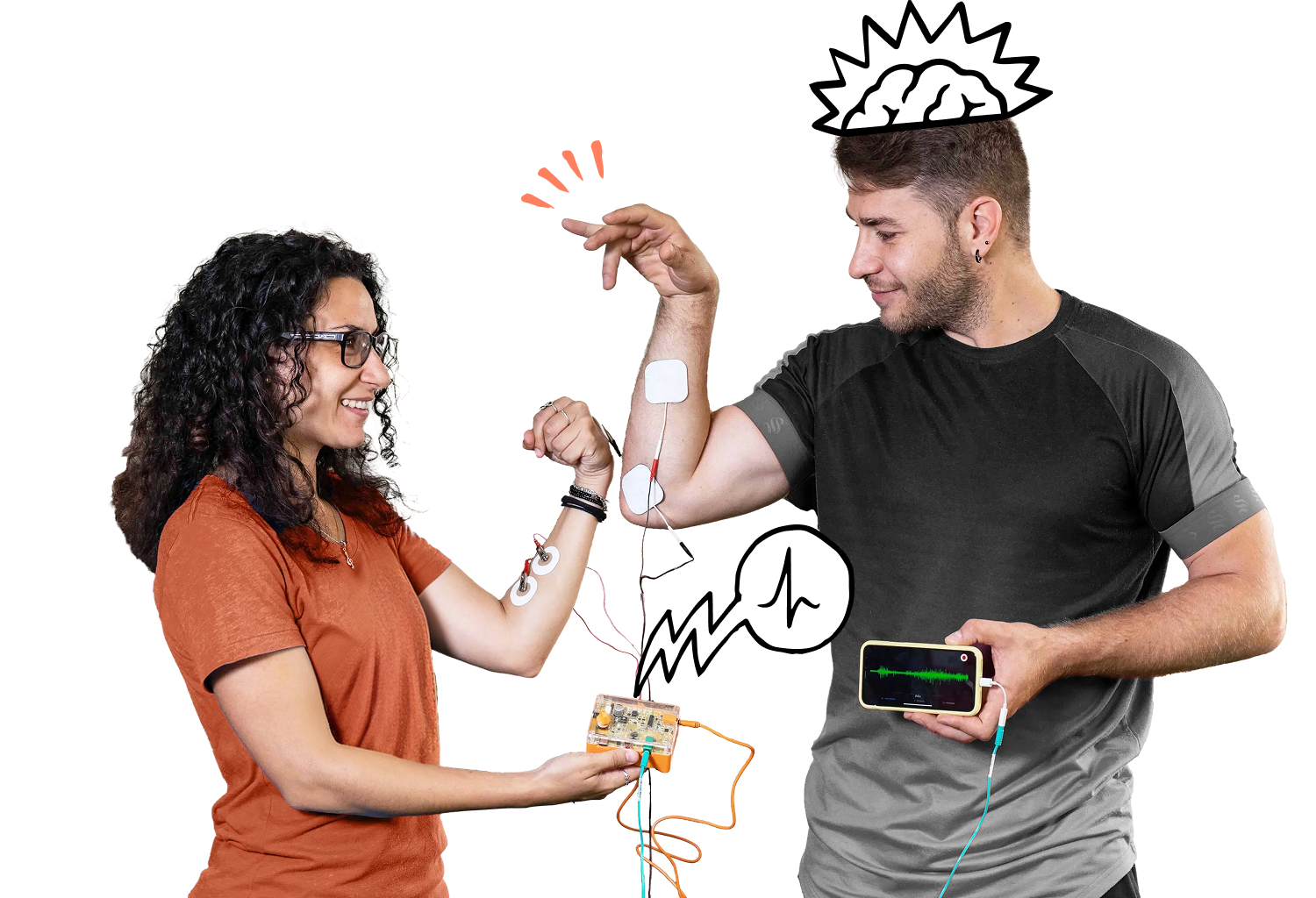
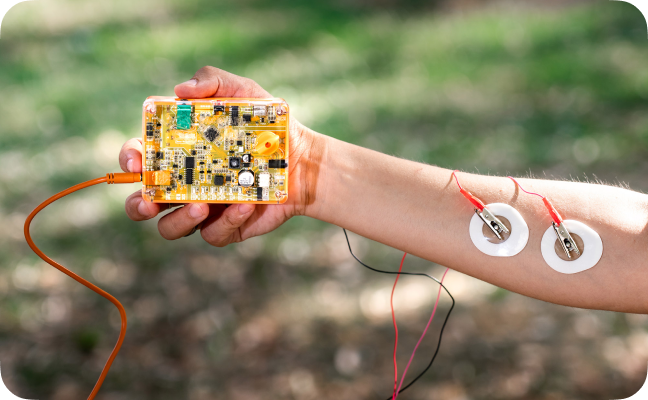
Record real neural signals from invertebrate models using professional-grade SpikerBox equipment in guided lab sessions.
Train in Woods Hole — a concentrated research community that includes the Marine Biological Laboratory (MBL). Hosted at the Children's School of Science and built for hands‑on lab work.
Visiting scientists with expertise in high-school neuroscience serve as your mentors throughout the program.
Inquiry-based. Design and execute your own group research project on local invertebrates, culminating in a formal presentation.
Explore how drugs and chemicals affect neuronal signaling through carefully designed experiments.
Learn scientific data recording, analysis techniques, and how to communicate research findings effectively.
July 20 – August 6, 2026 at the Children's School of Science, Woods Hole, MA
Arrive, settle in, and dive into neuroscience fundamentals. Learn spike recording and stimulation techniques in daily morning classes. Explore the basics of neuronal signaling.
Apply your skills in guided research projects. Develop data analysis techniques, attend scientist seminars, and propose your own group research project by end of week.
Execute your own research project using everything you've learned. Collect data, analyze results, and present your findings at the final presentation day.
Backyard Brains' equipment and methodology have been featured on the world's biggest stages, trusted by educators and scientists everywhere.
Our equipment, vision, and experiments have been presented on the global TED stage nine times, inspiring millions of viewers worldwide.
Watch on TED →This teacher training is supported by a grant from The Grass Foundation and held at the Children's School of Science in Woods Hole.
About The Grass Foundation →Authors of "How Your Brain Works" published by MIT Press — bringing neuroscience experiments to everyone, from classrooms to living rooms.
View Book →Middle & high school educators (Grades 6–12), community college instructors, and local teachers commutable to Woods Hole — no prior neuroscience experience required.
Hear from educators and students who have experienced Backyard Brains programs firsthand.
"A completely transformative experience. Made science fun again! My students were recording real neurons within the first hour."
"I finally have the skills and confidence to bring neuroscience into my classroom. The kits are incredible — students are engaged from day one."
"Working alongside PhD scientists was priceless. This program changed how I think about science and teaching science."
Tell us about yourself and why you're interested in this neuroscience teacher training at Woods Hole. We'll keep you updated on application details, deadlines, and program news.
Not at all! The program is designed to train you from the ground up. You'll learn the fundamentals alongside PhD scientists who specialize in teaching these concepts to beginners.
The program is run by Backyard Brains and the Children's School of Science in Woods Hole, MA.
The 2026 program runs from Saturday, July 20 to Saturday, August 6 — a total of three weeks during CSS Session B.
There's no cost to you — teachers receive a $3,000 stipend and 6 Neuron SpikerBox kits (approx. $900 value) to keep for their classrooms. Housing and meal stipends are available for out-of-town teachers.
Teachers will learn to set up and run in-class neuroscience labs, receive 6 Neuron SpikerBox kits for their classrooms, build a network of peers and mentors, and gain the skills to integrate inquiry-based neuroscience into their curriculum.
No. We welcome any science, STEM, or CTE educator interested in bringing live electrophysiology and neurobiology into their curriculum — biology, physics, chemistry, or other subjects.
Spots are limited to 4 teachers. Apply today.
Apply Now →